Osteoporosis: Myths, Facts, and Who’s Really at Risk
Osteoporosis is one of the most common bone conditions in the world — and one of the most misunderstood. Despite affecting millions of Canadians, it's still surrounded by misconceptions that delay prevention, diagnosis, and treatment. Some people assume it's just a normal part of getting old. Others believe it only affects women, or that there's nothing meaningful you can do once bone loss begins.
The reality is far more nuanced — and far more hopeful. Let's break down the most common myths, what the facts actually say, and who needs to be paying closest attention to their bone health.
Myth #1: Osteoporosis Only Affects Older Women
The Fact: Osteoporosis affects men and women of all ages, though risk does increase with age and is higher in women.
This is perhaps the most widespread myth — and it has real consequences. Because osteoporosis is so closely associated with older women, men are frequently underdiagnosed and undertreated, often discovering the condition only after a serious fracture.
The numbers tell a different story than the stereotype. According to Osteoporosis Canada, over 2.3 million Canadians are currently living with osteoporosis, and about 80% are women. But that leaves a significant number of men. Research published in Health Central estimates that men make up about 20% of people with osteoporosis, and 1 in 4 men over 50 will experience an osteoporotic fracture in their lifetime.
By age 65, men lose bone mass at roughly the same rate as women — the difference is mainly that women experience an accelerated period of bone loss around menopause, giving osteoporosis a head start. Men without that hormonal shift often go unscreened for longer, which means the condition is typically more advanced by the time it's caught.
Younger adults are not immune either. Bone loss can begin as early as the 30s, and certain conditions — eating disorders, celiac disease, irregular menstrual cycles, steroid use, or early menopause before age 45 — can accelerate it significantly at any age.
Myth #2: Osteoporosis Is Just a Normal Part of Aging
The Fact: Some bone density loss is a natural part of aging. Osteoporosis is not.
There's a meaningful difference between the gradual, modest decline in bone density that comes with age and the significant structural weakening that defines osteoporosis. Most people experience some degree of bone loss as they get older — but that doesn't mean fractures from minor falls or everyday movements are inevitable.
Osteoporosis represents a specific level of bone loss severe enough to make bones genuinely fragile. Whether a person reaches that threshold depends substantially on the bone density they built earlier in life, their genetics, their lifestyle, and whether bone loss is addressed proactively.
Peak bone mass is typically reached around age 30. What you do before that point — and in the years following — has a lasting impact on whether age-related decline stays gradual or accelerates into osteoporosis.
Myth #3: You'll Know If Your Bones Are Weak
The Fact: Osteoporosis is called the "silent thief" for good reason. Bone loss has no pain, no warning, and no obvious symptoms.
Most people only discover they have osteoporosis after a fracture — sometimes a relatively minor one. Vertebral fractures in particular can happen from bending forward, lifting something light, or even sneezing, and they may not cause obvious immediate pain. They're often discovered incidentally on an imaging scan done for another reason.
Subtle early signals do exist — gradual height loss, a slightly rounded upper back, decreased grip strength, or receding gums — but these are easy to attribute to other causes and frequently go unnoticed.
This is why bone mineral density (BMD) testing matters. A DEXA scan is quick, painless, and involves very low radiation — less than a standard chest X-ray. It gives you a T-score that tells you exactly where your bone density stands, and from there, a clear picture of your risk.
Screening is recommended for all women aged 65 and older, and for postmenopausal women under 65 who have additional risk factors. Men over 70, or men over 50 with significant risk factors, should also speak with their doctor about testing.
Myth #4: Osteoporosis Is a Death Sentence for Your Independence
The Fact: Osteoporosis can be managed effectively, and many people with the condition live full, active lives.
A diagnosis of osteoporosis is serious — but it's not a sentence. The condition can be slowed, and fracture risk can be meaningfully reduced through a combination of exercise, nutrition, medication where appropriate, and fall prevention strategies.
That said, the consequences of unmanaged osteoporosis — particularly hip fractures — are genuinely severe and shouldn't be minimized. Research published in the CDC WONDER database found that up to 24% of women over 50 die within one year of a hip fracture, often from complications rather than the fracture itself. This underscores why early detection and management matter so much.
The encouraging news is that when caught early, lifestyle interventions can significantly preserve bone density and prevent fractures. This is not a condition to simply wait and watch.
Myth #5: Milk and Calcium Supplements Are All You Need
The Fact: Calcium is important — but it's far from the whole picture.
Calcium is a cornerstone of bone health, no question. But calcium alone, without the co-factors that enable the body to actually absorb and use it, has limited impact. Vitamin D is essential for calcium absorption — without adequate vitamin D levels, the body absorbs only about 10–15% of dietary calcium. With sufficient vitamin D, that number rises to 30–40%. For many Canadians, especially during fall and winter months, vitamin D supplementation is necessary regardless of diet.
Beyond calcium and vitamin D, bone health also depends on magnesium, vitamin K, protein intake, and — critically — physical activity. Bones respond to mechanical loading. Without exercise that stresses the skeleton, calcium intake alone won't maintain density.
Myth #6: Exercise Is Too Risky When You Have Osteoporosis
The Fact: Exercise is one of the most effective tools for managing osteoporosis — but it needs to be the right kind, done correctly.
This myth keeps many people with osteoporosis sedentary out of fear, which actually accelerates bone loss and increases fall risk. The evidence is clear: appropriate exercise protects bones, builds the muscle that supports them, and reduces the likelihood of falling.
Research consistently shows that resistance training and weight-bearing exercise improve bone mineral density, particularly in the lumbar spine and hip — the areas most vulnerable to osteoporotic fracture. A 2015 study found that consistent resistance training over six months led to meaningful improvements in spinal BMD in postmenopausal women. Balance and coordination training — through tai chi, yoga, or targeted physiotherapy exercises — reduces fall risk, which is ultimately the key to preventing fractures.
What matters is that the exercise is matched to the individual's current bone density, fitness level, and fracture history. Not all movements are appropriate at every stage. High-flexion exercises, spinal rounding, and high-impact loading need to be modified or avoided depending on the person's condition. A registered physiotherapist can design a program that builds strength safely and progressively.
Myth #7: Osteopenia Always Becomes Osteoporosis
The Fact: Osteopenia — low bone mass — does not automatically progress to osteoporosis.
Osteopenia is the stage where bone density is lower than average but not yet at the level that meets the clinical definition of osteoporosis. Many people hear this diagnosis and assume the worst, but osteopenia is actually a window of opportunity. With the right lifestyle changes — improved nutrition, resistance exercise, adequate calcium and vitamin D, and addressing other risk factors — progression can be slowed or even halted.
Some people with osteopenia never develop osteoporosis at all. The outcome depends significantly on how proactively the condition is managed.
Who Is Really at Risk? What the Research Says
Understanding risk more precisely helps move beyond the common stereotypes that surround osteoporosis.
Women remain at the highest overall risk due to lower starting bone density and the sharp estrogen decline at menopause. At least 1 in 3 women will experience an osteoporotic fracture in their lifetime.
Men are consistently underdiagnosed. By age 65, bone loss rates in men and women converge. Men with low testosterone levels, a history of heavy alcohol use, long-term steroid use, or chronic conditions like celiac disease or inflammatory bowel disease face elevated risk that often goes unaddressed.
Younger adults with conditions that disrupt hormonal balance, nutrient absorption, or bone metabolism can develop osteoporosis well before midlife. This includes people with eating disorders, those who've undergone certain cancer treatments, and those with thyroid disorders or rheumatoid arthritis.
People on long-term medications — particularly corticosteroids used for conditions like asthma, lupus, or inflammatory bowel disease — face elevated bone loss risk that is frequently overlooked in clinical conversations about bone health.
How Physiotherapy Can Help
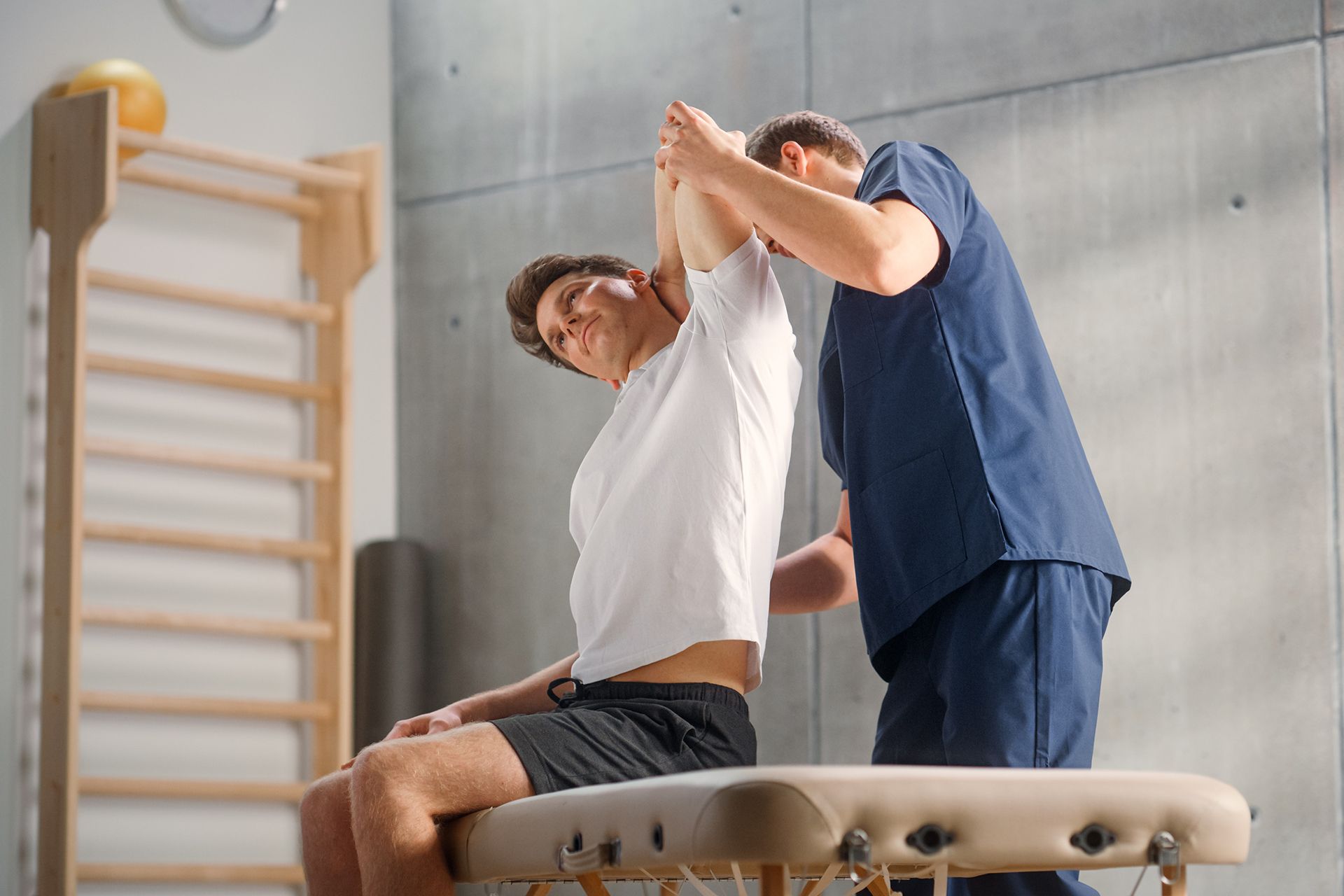
Whether you've just been diagnosed with osteoporosis or osteopenia, had a recent fracture, or simply want to be proactive about your bone health, physiotherapy plays a meaningful role at every stage.
Assessment and Risk Profiling A physiotherapist starts by getting a thorough picture of where you're at — reviewing your bone density results, medical history, current medications, posture, balance, muscle strength, and movement patterns. This isn't a generic assessment. It's about understanding your specific fracture risks and what's driving them, so the plan that follows actually addresses your situation.
Personalized Exercise Programming This is where physiotherapy has some of its strongest evidence for osteoporosis. A physio can design a progressive resistance and weight-bearing program that targets the bones most at risk — the spine, hip, and wrist — while working around any limitations you have. The goal is to load the skeleton in a way that signals the body to maintain or build density, without putting you at risk of injury. As strength and confidence improve, the program evolves with you.
Posture and Movement Education Many everyday movements — rounding the back to pick something up, twisting sharply, or carrying weight unevenly — can place significant stress on already fragile vertebrae. A physiotherapist will teach you how to move in ways that protect your spine, including how to safely bend, lift, carry, and get up from a chair or the floor. These aren't complicated adjustments, but they matter enormously for preventing fractures in daily life.
Balance and Fall Prevention Falls are the primary cause of osteoporotic fractures. Physiotherapy directly addresses the factors that increase fall risk — poor balance, muscle weakness, slow reaction time, and inner ear or sensory issues that affect stability. Balance training is a core component of any osteoporosis rehab program, and the research supporting its role in fracture prevention is robust.
Fracture Rehabilitation If a fracture has already occurred — whether a vertebral compression fracture, wrist fracture, or hip fracture — physiotherapy is a critical part of recovery. Rehabilitation focuses on restoring mobility and strength, managing pain, addressing postural changes, and safely returning you to the activities that matter most, while working to prevent a second fracture.
Ongoing Support and Monitoring Osteoporosis is a long-term condition. Physiotherapy isn't a one-time fix — it's an ongoing partnership. As your bone density results change, as you move through different life stages, or as other health conditions develop, your physio can adjust your program accordingly to keep you strong, mobile, and as fracture-free as possible.
Osteoporosis is more common, more complex, and more manageable than most people realize. The myths around who gets it and what can be done about it keep too many people from taking action during the window when intervention matters most.
If you have risk factors — regardless of age or gender — the most important step is to start the conversation with your healthcare team. A bone density scan, a review of your nutrition, and a physiotherapy assessment can give you a clear picture of where your bone health stands and a practical plan to protect it.
At Delta Physiotherapy & Rehab , our team can assess your bone health, movement patterns, and fall risk — and build a safe, evidence-based exercise program tailored to you. Book your assessment today.