TMJ Disorder: How Physio Can Help
If you've ever woken up with a sore, aching jaw, or noticed a clicking sound when you open your mouth to eat , you may already be familiar with the frustration of Temporomandibular Joint (TMJ) disorder. It's a condition that affects millions of people worldwide, yet it remains widely misunderstood, underdiagnosed, and under-treated.
What many people don't realize is that physiotherapy is one of the most effective, non-invasive treatments available for TMJ disorder. Rather than masking symptoms with pain medication or jumping straight to dental appliances and surgery, physiotherapy addresses the muscular, joint, and postural causes that drive the condition — offering lasting relief and genuine functional recovery.
This guide covers everything you need to know about TMJ disorder: what it is, what causes it, how to recognize it, and exactly how physiotherapy can help you get your life back.
What Is the Temporomandibular Joint?
The temporomandibular joint (TMJ) is one of the most complex and heavily used joints in the human body. Located just in front of each ear, it connects the lower jaw (mandible) to the temporal bone of the skull. Unlike most joints, which move in one plane, the TMJ performs a combination of hinge and sliding (gliding) movements that allow you to open and close your mouth, chew, speak, yawn, and swallow.
The TMJ is supported by an intricate system of muscles, ligaments, and a fibrocartilaginous disc that sits between the two joint surfaces, acting as a cushion and guide for smooth jaw movement. The muscles of mastication , particularly the masseter, temporalis, medial and lateral pterygoids — provide the powerful forces needed for chewing and are also the primary muscles implicated in TMJ dysfunction.
On average, the TMJ performs over 2,000 movements per day. It is one of the hardest-working joints in the body, and when something goes wrong with its mechanics, the impact on daily quality of life can be significant and pervasive.
What Is TMJ Disorder (TMD)?
Temporomandibular Disorder (TMD) - often referred to loosely as "TMJ" is an umbrella term for a group of conditions affecting the TMJ itself, the surrounding muscles of mastication, and the associated structures of the head, neck, and face. It is not a single diagnosis but a spectrum of dysfunction that can present in many different ways.
TMD is broadly classified into three main categories:
Myofascial TMD refers to pain and dysfunction originating primarily from the muscles of mastication and surrounding soft tissues. This is the most common form of TMD, accounting for the majority of cases. It is closely associated with jaw clenching (bruxism), postural dysfunction, stress, and cervical spine involvement.
Intra-articular TMD involves dysfunction within the joint itself, most commonly displacement of the articular disc (the cushion between joint surfaces). Disc displacement can occur with or without reduction (the disc returning to its normal position on mouth opening) and produces the characteristic clicking or popping sounds many TMD patients experience.
Degenerative TMD refers to osteoarthritic changes within the joint: loss of cartilage, bone remodeling, and structural degeneration — typically seen in older adults or following prolonged joint overloading. This produces crepitus (grinding or grating sounds) and progressive loss of jaw mobility.
Many patients present with a combination of myofascial and intra-articular components, and the condition frequently overlaps with cervical spine dysfunction, headache disorders, and stress-related conditions.
Causes and Contributing Factors
TMJ disorder rarely has a single, isolated cause. It is typically the result of multiple interacting factors — structural, postural, behavioral, and psychological — that collectively overload the joint and surrounding muscles. Understanding these contributing factors is essential for effective management.
Jaw Clenching and Bruxism
Bruxism — habitual clenching or grinding of the teeth — is one of the most significant drivers of TMD. It generates compressive forces in the TMJ and sustained, high-intensity contraction of the masseter and temporalis muscles far exceeding anything produced during normal chewing. Bruxism most commonly occurs during sleep (sleep bruxism) but can also occur during waking hours, particularly during periods of stress or concentration. Many people are completely unaware they clench until they present with jaw pain, headaches, or worn tooth surfaces.
Forward Head Posture
Forward head posture — the characteristic "chin forward, shoulders rounded" position that has become epidemic in the smartphone and desk-work era — is a major and frequently overlooked contributor to TMD. For every inch the head moves forward from its optimal position, the effective weight on the cervical spine and the demand on the muscles supporting the jaw increases substantially.
The muscles that open and close the jaw are anatomically and functionally connected to the muscles of the neck and upper back through fascial chains. When the head is carried forward, the resting position of the mandible changes, the hyoid bone is displaced, and the muscles of mastication are placed under abnormal resting tension — creating the perfect conditions for myofascial TMD to develop and persist.
Cervical Spine Dysfunction
The relationship between the cervical spine and the TMJ is bidirectional and well-established in the research literature. The C1–C3 cervical nerve roots share a pain referral pathway with the trigeminal nerve — the primary sensory nerve of the face and jaw. This means that dysfunction in the upper cervical spine (particularly the atlanto-occipital and atlanto-axial joints) can directly refer pain to the jaw, face, and temple region, mimicking or contributing to TMD.
Conversely, persistent TMD can drive protective muscle guarding in the cervical spine, contributing to neck pain, stiffness, and cervicogenic headache. In clinical practice, treating the cervical spine in isolation from the jaw — or vice versa — frequently produces incomplete results. Both must be assessed and addressed.
Trauma and Injury
Direct trauma to the jaw — a blow to the face, a fall, or a dental procedure requiring prolonged mouth opening — can injure the joint, displace the articular disc, or tear the supporting ligaments, triggering the onset of TMD. Whiplash from a motor vehicle accident is a particularly important mechanism: the rapid acceleration-deceleration of the head not only injures the cervical spine but transmits significant forces to the TMJ, which must stabilize the jaw against the inertial load of the head moving. TMD following MVA is common, underdiagnosed, and frequently requires both physiotherapy and dental collaboration to manage effectively.
Stress and Psychosocial Factors
Psychological stress is one of the most powerful modulating factors in TMD. Stress activates the sympathetic nervous system, elevates pain sensitivity (central sensitization), and directly increases jaw muscle activity — producing bruxism, jaw clenching, and facial tension. Research consistently shows that individuals with high stress levels, anxiety, and depression have significantly higher rates of TMD and more severe symptom presentations. This does not mean TMD is "all in the mind" — the physical pathology is real — but it does mean that psychosocial factors must be addressed alongside the physical ones for treatment to be fully effective.
Malocclusion and Dental Factors
Poor dental occlusion (bite), missing teeth, ill-fitting dental appliances, or prolonged unilateral chewing habits can create asymmetrical loading of the TMJ that, over time, contributes to joint and muscle dysfunction. However, the relationship between occlusion and TMD is more complex and less direct than was once believed — many people with significant malocclusion have no TMD symptoms, while others with normal occlusion have significant dysfunction.
Hypermobility
Generalized joint hypermobility, a common feature of conditions such as Ehlers-Danlos Syndrome (hEDS) and generalized hypermobility spectrum disorder , frequently affects the TMJ, causing excessive joint laxity, disc instability, and a tendency toward jaw dislocation. Hypermobile TMJ requires a specifically tailored physiotherapy approach focused on neuromuscular control and joint stability rather than mobilization.
Recognizing the Symptoms of TMJ Disorder
TMD produces a remarkably wide range of symptoms that extend well beyond the jaw itself, which is why it is so frequently misdiagnosed or treated piecemeal by multiple specialists. The following are the most common presentations:
Jaw Symptoms
- Pain or aching in the jaw joint, in front of the ear, or in the muscles of the cheek and temple
- Pain that worsens with chewing, speaking, yawning, or prolonged mouth opening
- Limited mouth opening — inability to open the mouth fully or comfortably (normal mouth opening is 35–55mm)
- Jaw deviation or deflection — the jaw deviating to one side on opening rather than tracking straight
- Jaw locking — either in the open or closed position
- A clicking, popping, or snapping sound on jaw opening or closing
- A grating or grinding sensation (crepitus) during jaw movement
- A sense of jaw "fatigue" or heaviness, particularly in the morning
Head and Face Symptoms
- Headache — often felt at the temples, across the forehead, or at the top of the head; frequently misdiagnosed as tension-type or migraine headache
- Facial pain or aching — a deep, dull pain in the cheeks or around the eye sockets
- Pain or pressure around the eye
- Ear pain, fullness, or a feeling of blockage without evidence of ear infection
- Tinnitus — ringing, buzzing, or hissing in the ears
- Dizziness or a sense of imbalance (related to the ear and vestibular connections of the TMJ region)
- Tooth pain or sensitivity without a dental cause
Neck and Shoulder Symptoms
- Neck pain and stiffness — particularly in the upper cervical region
- Suboccipital headache — pain at the base of the skull
- Shoulder tension and upper trapezius tightness
- Difficulty turning the head or looking upward
Sleep and Quality of Life Symptoms
- Disrupted sleep due to jaw pain or nocturnal bruxism
- Morning jaw stiffness and pain
- Difficulty eating — avoidance of hard, chewy, or large foods
- Difficulty speaking at length without jaw fatigue
- Impact on work performance, social interaction, and mood
The Physiotherapy Assessment for TMJ Disorder
Before any treatment begins, a thorough physiotherapy assessment establishes an accurate picture of the nature and severity of the TMD and its contributing factors. For TMJ disorder, this assessment is more comprehensive than it might appear, because the jaw cannot be properly assessed in isolation.
Jaw Assessment
The physiotherapist will assess:
Mouth opening range — measuring the maximum comfortable and maximum total mouth opening in millimetres, and assessing any deviation or deflection of the jaw during opening and closing.
Joint sounds — palpating the TMJ during movement to detect clicking, popping, or crepitus, and correlating these sounds with the pattern of disc displacement.
Muscle palpation — systematically assessing the masseter, temporalis, pterygoid muscles, and suprahyoid muscles for tenderness, trigger points, and muscle guarding. The correlation between muscle tenderness and symptom reproduction is highly informative for guiding treatment.
Joint play assessment — assessing the mobility and end-feel of the TMJ through gentle intra-oral and extra-oral techniques to identify restriction, laxity, or pain provocation patterns.
Functional assessment — evaluating jaw movement during chewing, speaking, and swallowing to identify dysfunctional movement patterns.
Cervical Spine Assessment
Given the well-established relationship between the cervical spine and TMD, a comprehensive cervical spine assessment is an essential component of every TMJ physiotherapy evaluation. This includes:
- Assessment of cervical range of motion and quality of movement
- Palpation of the upper cervical joints (C0–C3) for joint stiffness and tenderness
- Assessment of the deep cervical flexor muscles for weakness and motor control deficits
- Evaluation of postural alignment — particularly forward head posture and thoracic kyphosis
- Neurological screening if referred symptoms into the arms are present
- Postural and Breathing Assessment
The resting posture of the head, neck, and shoulders, and the patient's habitual breathing pattern (nasal vs. mouth breathing, chest vs. diaphragmatic breathing) significantly influence jaw resting position and muscle tension. These are assessed as part of the comprehensive evaluation.
How Physiotherapy Treats TMJ Disorder
Physiotherapy for TMD is multi-dimensional. Treatment addresses the joint itself, the surrounding muscles, the cervical spine, the postural factors driving the dysfunction, and the behavioral factors perpetuating it. Here is a detailed breakdown of the evidence-based approaches a physiotherapist may use:
Manual Therapy to the TMJ
Hands-on treatment applied directly to the temporomandibular joint is one of the most effective physiotherapy interventions for TMD.
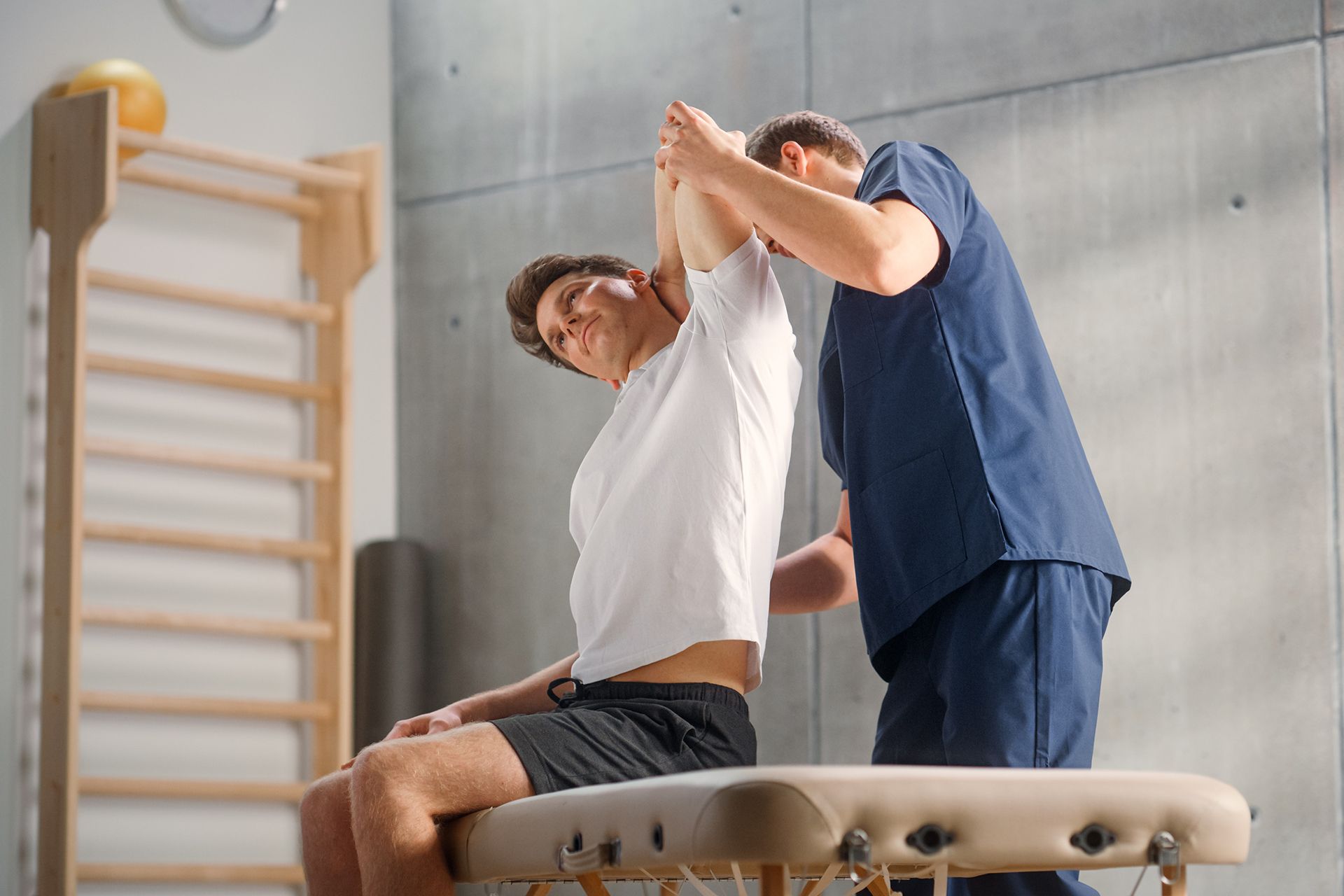
Joint mobilization involves gentle, rhythmic manual movements applied to the jaw joint to restore normal joint mechanics, reduce stiffness, and decrease pain. Mobilization techniques may be applied extra-orally (from outside the mouth) or intra-orally (with gloved hands inside the mouth), targeting specific movement restrictions — whether in mouth opening, lateral deviation, or protrusion.
Disc repositioning techniques are used when disc displacement is identified. These involve carefully guided jaw movements combined with gentle joint traction to encourage the displaced disc back toward its normal position. When successful, these techniques can eliminate the clicking and locking that characterize disc displacement.
Joint distraction applies a gentle longitudinal traction force to the TMJ, decompressing the joint surfaces, reducing pain, and improving mobility. This is particularly effective for painful, compressed, or arthritic TMJ presentations.
Myofascial release and massage to the masseter, temporalis, and pterygoid muscles addresses the muscular component of TMD — releasing trigger points, reducing hypertonicity, and improving the quality of movement. Both extra-oral and carefully performed intra-oral soft tissue techniques are used.
Manual Therapy to the Cervical Spine
Treating the upper cervical spine is an essential and often surprisingly powerful component of TMD physiotherapy. Mobilization or manipulation of the upper cervical joints (C0–C3) reduces afferent input to the trigeminal nucleus — the brainstem processing center for jaw and facial pain — thereby reducing TMD symptom severity. Research has demonstrated that upper cervical manual therapy alone can produce significant reductions in jaw pain, headache, and mouth opening restriction in patients with combined cervical-TMD presentations.
Therapeutic Exercise
Jaw range of motion exercises maintain and progressively restore normal mouth opening, lateral movement, and protrusion. A particularly important exercise in early rehabilitation is controlled, straight-line mouth opening using the tongue on the palate technique — a self-mobilization exercise that retrains the disc and mandibular condyle to move together properly during opening.
Jaw stabilization and neuromuscular retraining exercises rebuild the coordinated muscle activity needed for smooth, controlled jaw movement. The lateral pterygoid muscle — which is both a jaw opener and a disc stabilizer — is frequently dysregulated in TMD and requires specific retraining.
Deep cervical flexor (DCF) training addresses the weakness of the deep neck stabilizers that is consistently found alongside TMD. As described above, poor cervical stability creates abnormal resting jaw position and muscle tension. DCF training using the cranio-cervical flexion test approach is a gentle, specific exercise that significantly reduces cervicogenic contributions to TMD over time.
Postural correction exercises for the thoracic spine, scapulae, and cervical retraction address the forward head posture that perpetuates muscular TMD. Restoring optimal head-on-neck alignment reduces the resting tension in the muscles of mastication and allows the jaw to rest in its natural, relaxed position.
Diaphragmatic breathing retraining is an often-overlooked component of TMD treatment. Habitual mouth breathing and chest breathing increase upper trapezius and accessory neck muscle activity, contributing to jaw tension and forward head posture. Retraining nasal, diaphragmatic breathing reduces these compressive forces on the TMJ and has a calming effect on the autonomic nervous system — reducing the stress-driven jaw clenching that perpetuates myofascial TMD.
Pain Management Modalities
Dry needling is one of the most clinically effective tools for myofascial TMD. Inserting fine needles into trigger points in the masseter, temporalis, and pterygoid muscles produces an immediate reduction in muscle hypertonicity and referred pain. Patients frequently report dramatic improvements in jaw pain and mouth opening after dry needling, particularly when combined with manual therapy and exercise.
Ultrasound therapy delivers deep thermal and mechanical energy to the TMJ and surrounding muscles, promoting circulation, reducing inflammation, and softening adhesions in the joint capsule.
TENS (Transcutaneous Electrical Nerve Stimulation) can be applied to the TMJ region to modulate pain signals and reduce muscle hyperactivity, providing symptom relief that facilitates engagement with active rehabilitation.
Low-level laser therapy (LLLT) has accumulating evidence for reducing pain and inflammation in the TMJ and masseter muscle, and is used as an adjunct in some physiotherapy practices.
Heat therapy applied to the jaw and cheek muscles relaxes muscular tension, reduces morning stiffness, and improves circulation. A warm compress for 10–15 minutes before jaw exercises can significantly improve their effectiveness.
Education and Self-Management
Empowering patients with knowledge and self-management tools is one of the highest-value components of TMD physiotherapy. Key education areas include:
Jaw rest position awareness: The optimal jaw resting position is "teeth apart, lips together, tongue lightly on the palate." Many TMD patients habitually clench their teeth during the day without realizing it. Teaching awareness of and regular return to the jaw rest position throughout the day is one of the simplest and most effective self-management strategies available.
Parafunctional habit awareness: Habits such as gum chewing, nail biting, chewing on pens, resting the chin on the hand, and unilateral chewing all generate asymmetrical or repetitive loading of the TMJ. Identifying and reducing these habits is an important part of long-term TMD management.
Dietary modification: During acute TMD flares, temporarily transitioning to softer foods that require minimal jaw force — soups, smoothies, soft-cooked vegetables, fish, eggs — reduces joint loading and allows inflamed tissues to settle. Hard, chewy, or large foods (crusty bread, raw carrots, large sandwiches) should be avoided or cut into small pieces during symptomatic periods.
Stress management: Given the powerful role of stress in driving jaw clenching and sensitizing the pain system, physiotherapists will often discuss or refer for stress management strategies — including mindfulness, progressive muscle relaxation, and cognitive behavioral approaches — as part of a comprehensive TMD management plan.
Sleep hygiene: Improving sleep quality reduces nocturnal bruxism, lowers pain sensitivity, and supports tissue recovery. A physiotherapist may recommend specific sleep positions (avoiding stomach sleeping, which rotates and compresses the TMJ), use of a cervical support pillow, and referral to a dentist for a night guard if sleep bruxism is significant.
Collaboration with Dentists and Other Specialists
Physiotherapy is highly effective for TMD, but it works best as part of a collaborative, multidisciplinary approach. Depending on the nature and complexity of the presentation, physiotherapy may be coordinated with:
Dentists and prosthodontists who may prescribe an occlusal splint or night guard to reduce the compressive forces of bruxism on the TMJ — particularly valuable during sleep when the patient cannot consciously control jaw clenching.
Oral and maxillofacial surgeons in cases of significant structural disc displacement, joint degeneration, or joint locking that has not responded to conservative management and may require arthroscopy or arthroplasty.
Neurologists when headache disorders, facial neuralgia (such as trigeminal neuralgia), or complex pain presentations require specialist investigation and management.
Psychologists and pain specialists when central sensitization, anxiety, depression, or post-traumatic stress are significant contributors to the overall pain experience.
ENT specialists to rule out middle ear pathology when ear pain, tinnitus, or vertigo are prominent features.
In the majority of cases, a well-designed physiotherapy program combined with basic dental splinting is sufficient to achieve excellent outcomes. Surgery is rarely required and should be considered only after conservative management has been thoroughly and consistently applied.
What to Expect from TMJ Physiotherapy Treatment
Many patients with TMJ disorder have lived with their symptoms for months or years before seeking physiotherapy — often because they didn't know it was an option. Understanding what the treatment journey looks like helps set realistic expectations.
Initial sessions (weeks 1–3) focus on assessment, education, manual therapy to the jaw and cervical spine, dry needling if appropriate, and introduction of a home exercise program. Pain relief and improvement in mouth opening are often noticeable within the first two to four sessions.
Middle phase (weeks 3–8) progresses to more active exercise rehabilitation — jaw stabilization, cervical strengthening, postural correction, and breathing retraining. Self-management strategies become increasingly central as the patient builds independence.
Later phase (weeks 8–12+) consolidates strength, movement quality, and postural habits, and transitions toward a long-term self-management program. Follow-up sessions may be scheduled monthly or as needed to address flare-ups and monitor progress.
Most patients with uncomplicated myofascial or mild intra-articular TMD achieve significant improvement within 6–12 weeks of physiotherapy. More complex presentations — severe disc displacement, longstanding degenerative changes, or TMD complicated by significant psychosocial factors — may require a longer treatment course and multidisciplinary support.
Self-Help Strategies for TMJ Relief
While physiotherapy provides the structured framework for recovery, what you do between sessions matters enormously. Here are evidence-informed self-management strategies to support your treatment:
Practice the jaw rest position. Throughout the day, regularly check in: teeth apart, lips together, tongue gently on the palate. Set a phone reminder every hour if needed until this becomes habitual.
Apply moist heat. A warm, damp cloth or heat pack applied to the jaw and cheek muscles for 10–15 minutes, particularly in the morning or before exercises, relaxes muscle tension effectively.
Eat soft foods during flares. When symptoms are heightened, choose foods that require minimal chewing force. Cut food into small pieces and chew on both sides as evenly as possible.
Avoid jaw overuse. Extended talking, singing, dental appointments requiring prolonged mouth opening, and yawning widely can all aggravate TMD. Support your jaw with your hand during unavoidable wide opening, and ask your dentist for regular breaks during lengthy procedures.
Massage your jaw muscles. Gentle circular massage to the masseter muscle (the thick muscle in the cheek that bulges when you clench) for 60–90 seconds on each side, 2–3 times daily, can provide meaningful short-term pain relief and reduce muscle tension.
Reduce jaw clenching triggers. Identify when you tend to clench — during driving, computer work, exercise, or stressful conversations — and develop a conscious habit of checking and releasing jaw tension in these situations.
Sleep on your back or side with a supportive pillow. Stomach sleeping with the face pressed into the pillow compresses the TMJ and cervical spine and should be avoided. A cervical contour pillow that maintains the natural neck curve reduces overnight joint compression.
Final Thoughts
TMJ disorder is a complex condition that affects far more than just the jaw. It influences how you eat, sleep, speak, work, and feel — and when left unmanaged, it tends to become more entrenched over time. The good news is that physiotherapy offers a powerful, evidence-based, and non-invasive path to genuine recovery.
By addressing the joint, the muscles, the cervical spine, the posture, and the behavioral and psychological factors that perpetuate the condition, physiotherapy treats TMD at its roots — not just its symptoms. Most patients are genuinely surprised by how much better they feel and how much their function improves with a structured, expert-guided program.
If you've been struggling with jaw pain, clicking, headaches, ear pain, or any of the other symptoms described in this article, don't accept them as something you simply have to live with. Reach out
to a physiotherapist
experienced in TMJ disorder, get a thorough assessment, and take the first step toward lasting relief.