Rotator Cuff Injuries Explained: From Calcification to Tears
Shoulder pain is one of the most frequent musculoskeletal complaints treated by healthcare professionals today. Because the shoulder is the most mobile joint in the human body, it relies heavily on a complex group of four muscles and tendons known as the rotator cuff (the supraspinatus, infraspinatus, teres minor, and subscapularis). When these structures are compromised—whether through sudden injury, gradual wear, or chemical changes—the impact on your quality of life can be profound.
Understanding the specific nature of your shoulder condition is essential for effective treatment. Below, we explore the most common rotator cuff pathologies, prevention strategies, and how modern physiotherapy can restore your function.
The conditions
Shoulder Calcification
CALCIFIC TENDINOPATHY
Calcific tendinopathy of the shoulder occurs when calcium deposits form within the tendons of the rotator cuff, most commonly the supraspinatus tendon. These hard, chalk-like deposits can irritate surrounding tissue, cause intense inflammation, and restrict movement. It affects roughly 3–20% of adults and is most common between ages 30 and 60.
CAUSES
- Age-related tendon degeneration
- Reduced blood supply to tendons
- Repetitive overhead activity
- Metabolic conditions (diabetes, thyroid disorders)
- Genetic predisposition
SYMPTOMS
- Sudden, severe shoulder pain (acute phase)
- Deep aching at rest or at night
- Pain reaching overhead or behind the back
- Tenderness over the shoulder joint
- Limited range of motion
STAGES
- Formative — calcium builds up
- Resting — often painless
- Resorptive — most painful phase, toothpaste-like calcium reabsorbs
- Post-calcific — tendon repairs itself
Rotator Cuff Tendonitis
ACUTE INFLAMMATION OF ROTATOR CUFF TENDONS
Rotator cuff tendonitis is an acute inflammatory condition of one or more of the four rotator cuff tendons (supraspinatus, infraspinatus, teres minor, subscapularis). It is often the result of sudden overuse or a specific injury. Unlike tendinopathy, which is degenerative, tendonitis involves active, chemical inflammation and can resolve fully with the right treatment.
CAUSES
- Sudden increase in activity load
- Overhead sports (swimming, tennis, throwing)
- Poor lifting mechanics
- Muscle imbalances around the shoulder
- Postural problems compressing tendons
SYMPTOMS
- Sharp pain with arm elevation
- Painful arc between 60–120° of movement
- Tenderness at the front or top of shoulder
- Weakness lifting objects
- Pain when lying on affected side
RISK FACTORS
- Age over 40
- Desk-based or overhead work
- Athletes in throwing/racket sports
- Weak rotator cuff or scapular muscles
- History of shoulder injury
Rotator Cuff Tendinopathy
CHRONIC DEGENERATIVE TENDON CHANGE
While tendonitis describes acute inflammation, tendinopathy refers to a chronic, degenerative breakdown of tendon structure. The collagen fibres within the tendon become disorganised, the tendon thickens, and it loses its ability to withstand load effectively. This is often the result of repeated microtrauma that outpaces the tendon's repair capacity.
CAUSES
- Chronic overload or repetitive strain
- Inadequate recovery between activities
- Ageing and reduced collagen quality
- Systemic factors (metabolic syndrome)
- Previous unresolved tendonitis
SYMPTOMS
- Diffuse, deep aching in shoulder
- Stiffness and pain in the morning
- Reduced strength and endurance
- Pain that warms up but returns after activity
- Tendon feels thick or nodular
KEY DISTINCTION
- Tendinopathy = structural change, not just inflammation
- Anti-inflammatory medication is less effective
- Requires progressive loading to stimulate repair
- Responds well to shockwave therapy
Rotator Cuff Tear
PARTIAL OR FULL-THICKNESS TENDON TEAR
A rotator cuff tear involves a physical disruption of one or more of the rotator cuff tendons. Tears range from small partial-thickness tears (where only part of the tendon is involved) to full-thickness or massive tears that completely sever the tendon from bone. Tears can be traumatic (sudden injury) or degenerative (gradual wear over years).
CAUSES
- Acute: fall on outstretched arm, sudden heavy lift
- Degenerative: years of tendon wear and impingement
- Bone spurs abrading the tendon
- Poor blood supply to supraspinatus
- Steroid injection overuse weakening tissue
SYMPTOMS
- Weakness raising arm from side
- Difficulty reaching behind back
- Severe night pain (full tear)
- Audible or palpable clicking/clunking
- Muscle wasting over time
TYPES
- Partial-thickness: fibres partially disrupted
- Full-thickness: complete tendon rupture
- Massive: multiple tendons involved
- Most common: supraspinatus tendon
Shoulder Bursitis
SUBACROMIAL / SUBDELTOID BURSA INFLAMMATION
Bursitis is inflammation of the bursa a small, fluid-filled sac that acts as a cushion between the rotator cuff tendons and the overlying acromion bone. The subacromial bursa is the most commonly affected in the shoulder. When irritated, it swells and becomes exquisitely painful, particularly with overhead movements and compression.
CAUSES
- Repetitive overhead activity compressing the bursa
- Direct trauma to the shoulder tip
- Bone spurs narrowing the subacromial space
- Underlying rotator cuff dysfunction
- Inflammatory conditions (rheumatoid arthritis, gout)
- Infection (septic bursitis — rare)
SYMPTOMS
- Pain at the tip and outer shoulder
- Painful arc on arm elevation (60–120°)
- Significant night pain and sleep disruption
- Swelling and warmth over the shoulder
- Pain reaching across the body
OVERLAP
- Bursitis rarely occurs in isolation
- Often co-exists with RC tendinopathy or tear
- Part of "shoulder impingement syndrome"
- Treating the underlying RC pathology is essential
Prevention
Preventing Shoulder Conditions
01 Strengthen the rotator cuff
Regularly perform internal and external rotation exercises, plus scapular stabilisation work. A strong cuff centralises the humeral head and reduces impingement risk.
02 Correct your posture
Forward head posture and rounded shoulders narrow the subacromial space. Regular thoracic mobility work and postural awareness during desk-based tasks significantly reduce shoulder stress.
03 Progress load gradually
Avoid sudden spikes in training volume or intensity. The 10% rule increasing load by no more than 10% per week allows tendons adequate time to adapt and remodel.
04 Warm up and warm down
Dynamic warm-up before overhead activities and gentle cool-down stretching improve tendon health, blood flow, and tissue extensibility over the long term.
05 Optimize your workstation
Screen height, chair position, and mouse placement all influence shoulder mechanics. An ergonomic review can prevent insidious postural overload in office workers.
06 Address pain early
Do not push through persistent shoulder pain. Early physiotherapy assessment and intervention prevents acute tendonitis from becoming chronic tendinopathy or progressing to a tear.
Treatment
How Physiotherapy Helps
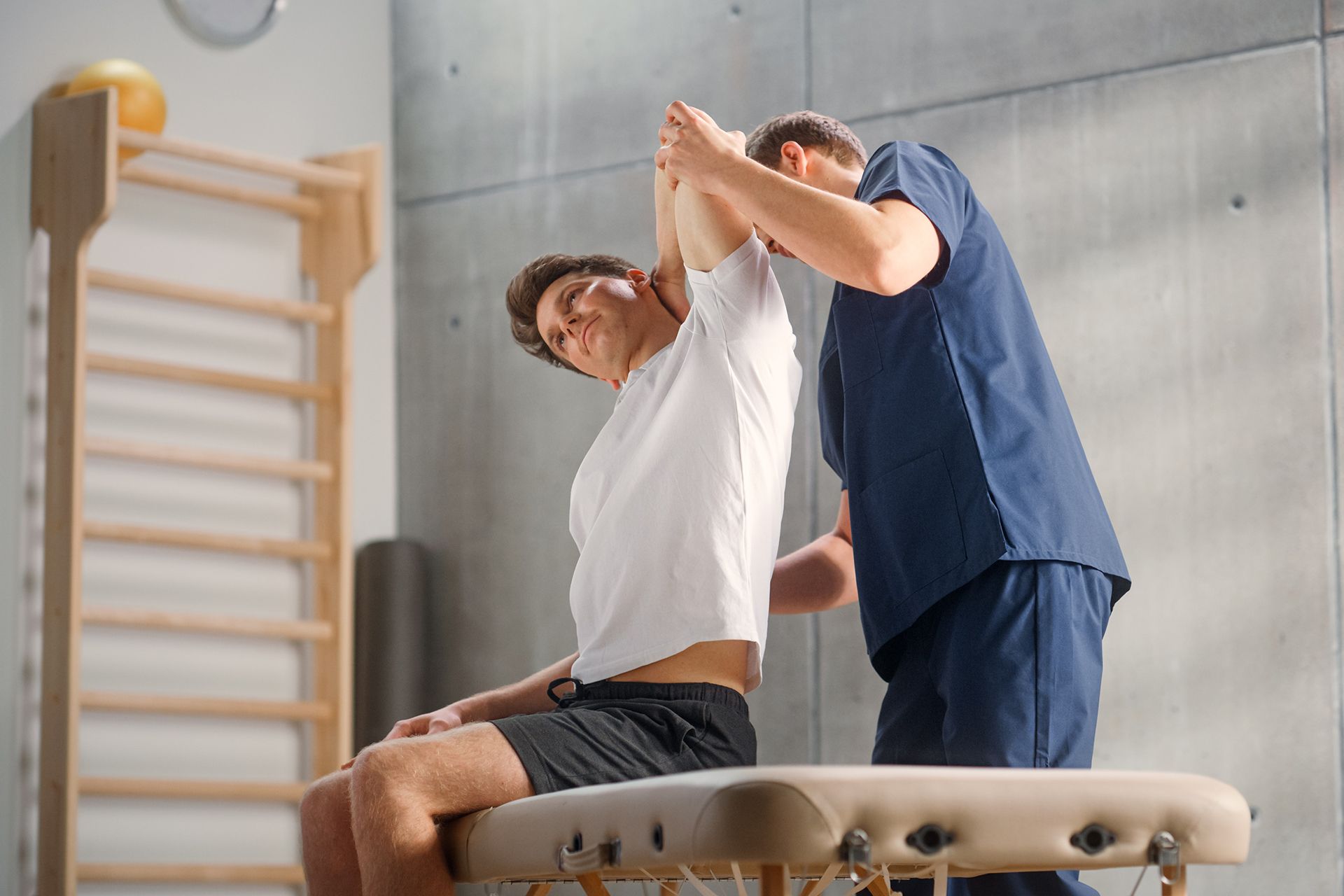
Physiotherapy is the cornerstone of conservative management for all shoulder conditions described above. A skilled physiotherapist will first conduct a thorough assessment including movement analysis, strength testing, and special orthopedic tests, to accurately diagnose which structures are involved and at what stage. Treatment is then tailored accordingly, and almost always involves multiple modalities working in combination.
Manual therapy & joint mobilization
Hands-on techniques to restore glenohumeral and acromioclavicular joint mobility, reduce pain, and normalize movement patterns that have been altered by guarding or disuse.
Exercise rehabilitation
Progressive, structured loading is the most evidence-based treatment for tendinopathy and tears. Isometric exercises in the early painful phase progress to isotonic, then heavy slow resistance loading to drive tendon remodeling.
Postural correction & education
Identifying and modifying contributing factors — including sport technique, training load, sleep position, and occupational habits — is essential for long-term resolution and prevention of recurrence.
Shockwave Therapy for Shoulder Conditions
Extracorporeal Shockwave Therapy(ESWT) has emerged as one of the most clinically supported treatments for stubborn shoulder conditions particularly calcific tendinopathy, chronic RC tendinopathy, and bursitis that has not responded to conventional physiotherapy alone.
Shockwave uses high-energy acoustic pressure waves delivered directly to the affected tissue via a handheld applicator. There are two main types: radial shockwave (RSWT), which disperses energy over a broader area and is ideal for superficial tendinopathy, and focused shockwave (FSWT), which concentrates energy at a precise depth, particularly effective at breaking down and dispersing calcium deposits.
Calcium Fragmentation: Focused shockwaves use high-energy acoustic pulses to physically fragment calcium deposits. This triggers the body’s resorptive phase, often reducing deposit size by 50–80%.
Neovascularization : The treatment stimulates the growth of new micro-vessels, bringing fresh blood and nutrients to tendons that naturally have a poor blood supply.
Bursal inflammation: By fixing the underlying tendon mechanics, shockwave therapy indirectly allows reactive bursitis to settle without the need for invasive cortisone injections.
Shoulder pain is one of the most common musculoskeletal complaints but it is also one of the most treatable with the right diagnosis and a structured, evidence-based approach. Whether you are dealing with the sudden agony of acute calcification, the grinding persistence of tendinopathy, or the weakness of a partial tear, physiotherapy including modern tools like shockwave therapy can make a profound difference to your recovery and long-term shoulder health.
Don't wait for pain to become disability. Early assessment and intervention remain the most powerful tools of all.