Sports Injury Rehab: Getting Back in the Game
Whether you're a weekend warrior, a competitive athlete, or someone who simply loves staying active, a sports injury can feel like the rug has been pulled out from under you. One moment you're performing at your best — and the next, you're sidelined, frustrated, and wondering how long it will be before you can do what you love again.
The good news is that sports injury rehabilitation has advanced enormously. With the right assessment, the right treatment plan, and the right mindset, most athletes return to full competition not just recovered — but stronger, more resilient, and better prepared than before the injury. This guide walks you through the most common sports injuries, how they happen, what the rehabilitation process looks like, and how physiotherapy helps you get back in the game safely and confidently.
Understanding Sports Injuries: Acute vs. Overuse
Before diving into specific injuries, it helps to understand the two broad categories that most sports injuries fall into:
Acute injuries occur suddenly, typically from a single traumatic event — a tackle, a fall, a collision, or an awkward landing. Ligament tears, muscle strains, fractures, and dislocations are examples of acute injuries. The onset of pain is immediate, and the mechanism of injury is usually clear.
Overuse injuries develop gradually over time, caused by repetitive stress on a tissue that exceeds its capacity to recover between training loads. Tendinopathies, stress fractures, and bursitis are classic overuse injuries. Pain builds slowly, often starting as a mild ache that athletes push through — until it becomes severe enough to limit performance or stop activity entirely.
Both types require structured rehabilitation, but the approach differs significantly. Acute injuries often involve an initial phase of protection and inflammation management before progressive loading begins. Overuse injuries require a more nuanced approach of load management, tissue capacity building, and training modification from the outset.
The Most Common Sports Injuries
1. ACL Tear (Anterior Cruciate Ligament)
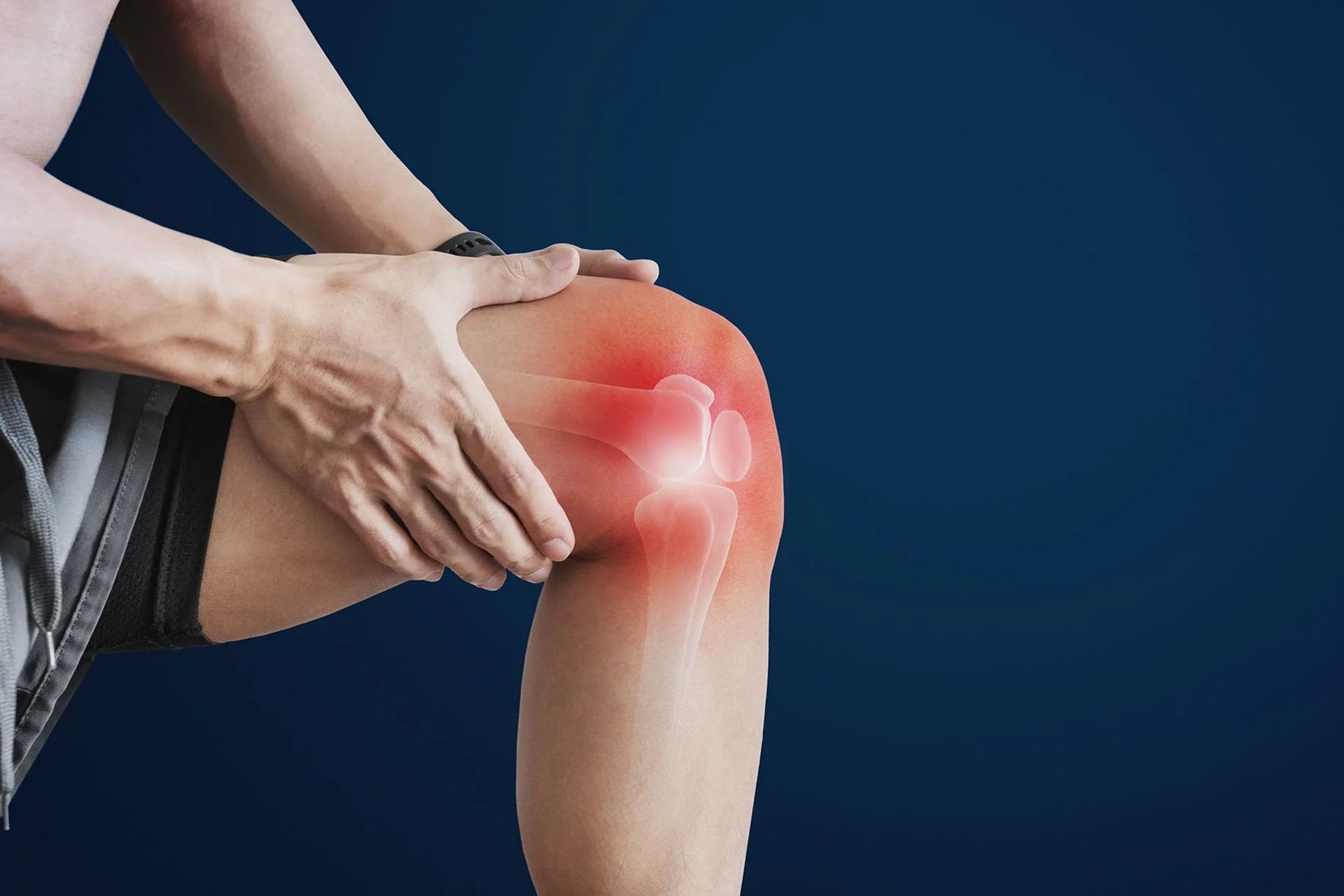
The ACL is one of four major ligaments in the knee, running diagonally through the middle of the joint and providing rotational stability. ACL tears are among the most feared injuries in sport — affecting athletes in soccer, basketball, football, skiing, and netball disproportionately — due to their severity and the length of recovery involved.
How it happens: ACL tears most commonly occur through non-contact mechanisms — planting the foot and pivoting, cutting sharply, or landing awkwardly from a jump with the knee collapsing inward (valgus collapse). Direct contact to the knee can also cause ACL injury, often combined with damage to other structures.
Symptoms:
- An audible or felt "pop" at the time of injury
- Immediate significant swelling (hemarthrosis — blood in the joint)
- Severe pain followed by an aching, unstable feeling
- Inability to continue playing
- A feeling that the knee "gives way" with rotational movements
- Difficulty fully straightening or bending the knee
Rehabilitation overview: ACL rehabilitation is a 9–12 month process (sometimes longer) whether surgery (ACL reconstruction) or conservative management is chosen. The phases progress from swelling and range of motion restoration, to strength building, to neuromuscular retraining, to sport-specific conditioning, and finally to return-to-sport criteria testing. Return-to-sport decision-making is based on objective criteria — not time alone — including limb symmetry index (LSI) testing and hop tests.
2. Ankle Sprain
Ankle sprains are the single most common sports injury across virtually all athletic populations. Despite being frequently dismissed as "just a sprain," improperly managed ankle sprains are the leading cause of chronic ankle instability, re-injury, and long-term joint degeneration.
How it happens: The most common mechanism is inversion — the foot rolls inward, overstretching or tearing the lateral ankle ligaments (most often the anterior talofibular ligament, or ATFL). This occurs during jumping, landing, cutting, or running on uneven surfaces. Eversion sprains (rolling outward) and high ankle sprains (syndesmosis injuries) are less common but typically more severe.
Symptoms:
- Immediate pain on the outer (or inner) aspect of the ankle
- Rapid swelling and bruising
- Tenderness over the affected ligaments
- Difficulty weight-bearing
- A feeling of instability or "giving way"
Rehabilitation overview: Ankle sprain rehabilitation follows a three-phase model: acute management (PEACE & LOVE — see below), progressive range of motion and strengthening, and proprioceptive and sport-specific training. Full rehabilitation is essential to restore the joint's position sense (proprioception) and neuromuscular control — the factors most responsible for re-injury risk if left unaddressed.
3. Hamstring Strain
Hamstring strains are the most common muscle injury in field sports — accounting for a significant proportion of all injuries in soccer, AFL, rugby, sprinting, and athletics. They are also notorious for their high re-injury rate when not fully rehabilitated.
How it happens: Hamstring strains most commonly occur during high-speed running, when the hamstring must simultaneously contract forcefully while being stretched — particularly in the late swing phase of the running cycle. A sudden explosive movement — a sprint, kick, or leap — can produce a strain at any of the three grades of severity.
Symptoms:
- Sudden sharp pain in the back of the thigh during high-intensity activity
- A "pop" or "snap" sensation in more severe tears
- Immediate pain with walking, running, or knee flexion
- Bruising appearing 24–48 hours after injury (may track down toward the knee)
- Tenderness and a palpable defect in the muscle in Grade III tears
- Pain with sitting due to the ischial tuberosity attachment being close to the seat
Rehabilitation overview: Eccentric hamstring loading — particularly the Nordic Hamstring Exercise — is the cornerstone of both rehabilitation and injury prevention. The rehabilitation program progresses from acute pain management, to range of motion restoration, to progressive eccentric loading, to high-speed running reintroduction, with objective running speed and strength criteria guiding return to sport.
4. Rotator Cuff Injury
The rotator cuff is a group of four muscles (supraspinatus, infraspinatus, teres minor, and subscapularis) that surround and stabilize the shoulder joint. Rotator cuff injuries range from tendinopathy and bursitis to partial and full-thickness tears, and are common in throwing sports (baseball, cricket, volleyball), racquet sports, swimming, and contact sports.
How it happens: Rotator cuff injuries occur through two main mechanisms. Acute tears result from a single traumatic event — a fall on an outstretched arm, a heavy lift, or a shoulder dislocation. Overuse injuries develop gradually through repetitive overhead activity that exceeds the cuff's recovery capacity, producing progressive tendon degeneration and impingement.
Symptoms:
- Pain at the front or outer aspect of the shoulder, often radiating into the upper arm
- Pain that worsens with overhead activity, reaching behind the back, or lifting
- A painful arc of movement between 60–120 degrees of shoulder elevation
- Night pain — particularly when lying on the affected shoulder
- Weakness with external rotation or overhead pressing
- Catching or clicking in the shoulder joint
Rehabilitation overview: Rotator cuff rehabilitation focuses on restoring full pain-free range of motion, rebuilding rotator cuff strength and endurance (particularly external rotation strength), and addressing scapular stability and thoracic mobility — factors that significantly influence shoulder mechanics. Sport-specific loading and throwing/overhead movement retraining are reintroduced progressively in later phases.
5. Patellofemoral Pain Syndrome (PFPS)
Patellofemoral Pain Syndrome — often called "runner's knee" — is one of the most common overuse injuries in sport, affecting runners, cyclists, jumpers, and team sport athletes. It refers to pain arising from the interface between the kneecap (patella) and the underlying femur (thigh bone).
How it happens: PFPS develops when the patella tracks abnormally in the femoral groove during movement, generating excessive compressive and shear forces on the cartilage surface underneath. Contributing factors include weak hip abductors and external rotators (causing inward collapse of the femur), tight iliotibial band or lateral retinaculum, reduced quadriceps strength, overpronation of the foot, and sudden increases in training load.
Symptoms:
- A dull, aching pain around or behind the kneecap
- Symptoms that worsen with prolonged sitting ("theatre sign"), stairs, squatting, and downhill running
- Pain that eases briefly at the start of activity but returns with continued loading
- Occasional crepitus (grinding or clicking) under the kneecap
- Stiffness after prolonged inactivity
Rehabilitation overview: PFPS rehabilitation addresses the full biomechanical chain — from the foot and ankle through the hip and pelvis to the knee. Hip strengthening (particularly gluteus medius), quadriceps retraining, foot orthotic assessment, load management, and running gait retraining are all important components. Outcomes with physiotherapy are excellent, with most athletes returning to full activity within 6–12 weeks.
6. Shin Splints (Medial Tibial Stress Syndrome)
Medial Tibial Stress Syndrome (MTSS) — commonly known as shin splints — is an extremely common overuse injury in runners, military recruits, and athletes in high-impact sports. It refers to pain along the inner border of the tibia (shin bone) caused by repetitive stress exceeding the bone's remodeling capacity.
How it happens: MTSS is fundamentally a load management issue — it occurs when training volume or intensity is increased too rapidly for the tibial bone and surrounding fascia to adapt. Contributing factors include running on hard surfaces, worn footwear, overpronation, low bone density, and training errors (the "too much, too soon" pattern).
Symptoms:
- A diffuse aching or sharp pain along the inner lower leg, typically over a 5cm or greater area
- Pain that is worst at the start of activity, may ease during warm-up, and returns after activity
- Tenderness on palpation along the inner tibial border
- Mild swelling in the lower leg
- In severe cases, pain that persists throughout activity and at rest
Rehabilitation overview: Load management is the foundation of MTSS treatment — a structured reduction in running volume followed by a gradual, systematic return-to-running program. Calf strengthening, foot and ankle mechanics assessment, orthotic prescription if needed, and bone loading progressions guide return to full training.
7. Tennis Elbow (Lateral Epicondylalgia)
Despite its name, tennis elbow affects far more non-tennis players than tennis players. It is a tendinopathy of the common extensor origin at the outer elbow — specifically the extensor carpi radialis brevis (ECRB) — caused by repetitive gripping, wrist extension, and forearm loading.
How it happens: Repetitive gripping and wrist extension activities — racquet sports, manual labor, keyboard use, weightlifting, and painting — subject the common extensor tendon to repeated high compressive and tensile loads that, over time, produce degenerative tendon changes rather than classical inflammation.
Symptoms:
- Pain and tenderness at the outer elbow, particularly over the lateral epicondyle
- Pain that radiates down the forearm with gripping or lifting activities
- Weakness of grip strength
- Pain with simple daily tasks — picking up a cup, opening a jar, typing
- Morning stiffness and discomfort at the elbow
Rehabilitation overview: Lateral epicondylalgia is primarily managed with progressive tendon loading — specifically isometric exercises in the acute phase, followed by isotonic and then heavy slow resistance (HSR) training. Activity modification, ergonomic assessment, and wrist bracing for symptom management during activity are important adjuncts.
8. Stress Fractures
Stress fractures are tiny cracks in bone caused by repetitive mechanical loading that outpaces the bone's ability to remodel and repair. They are common in distance runners, military personnel, ballet dancers, and gymnasts, most frequently affecting the tibia, metatarsals, fibula, and navicular.
How it happens: Training load errors, poor nutritional status (particularly low energy availability and vitamin D/calcium deficiency), low bone density, and biomechanical factors such as high ground reaction forces and running mechanics all contribute to stress fracture development. The female athlete triad (low energy availability, menstrual dysfunction, low bone density) is a particularly important risk factor.
Symptoms:
- A localized, progressive pain at a specific bony site that worsens with weight-bearing activity
- Pain that initially appears only late in a training session but progressively appears earlier and persists at rest
- Point tenderness on palpation of the bone — usually over a very specific, small area
- Swelling and warmth over the fracture site in some cases
Rehabilitation overview: Stress fractures require a period of relative or complete unloading, depending on the fracture site and grade. High-risk sites (navicular, femoral neck, anterior tibial cortex, medial malleolus) require longer protection and medical management. Return to running follows a structured graded loading protocol, with nutrition optimization and training load management critical to preventing recurrence.
The Rehabilitation Process: Phase by Phase
Regardless of the specific injury, sports injury rehabilitation follows a logical, progressive framework. Moving through phases too quickly is the leading cause of re-injury and setbacks.
Phase 1: Protection and Acute Management
Goal: Control pain and inflammation, protect the injured tissue, and prevent secondary complications.
Duration: Typically days 1–7, though this varies significantly by injury severity.
The current evidence-based framework for acute soft tissue injury management is the PEACE & LOVE protocol — replacing the older RICE (Rest, Ice, Compression, Elevation) model:
PEACE (immediate management):
- Protect — Limit movement for 1–3 days to reduce bleeding and prevent aggravation
- Elevate — Raise the limb above heart level to reduce swelling
- Avoid anti-inflammatories — NSAIDs and ice may inhibit the natural inflammatory response that initiates tissue healing (use for pain management only if necessary, and sparingly)
- Compress — Apply an elastic bandage to reduce swelling
- Educate — Understand the injury, avoid passive treatments, and embrace active recovery
LOVE (subsequent management):
- Load — Optimal loading (not rest) stimulates healing and restores tissue tensile strength
- Optimism — A positive, confident mindset is one of the strongest predictors of recovery speed
- Vascularization — Pain-free cardiovascular exercise (cycling, swimming) initiated early to maintain fitness and promote blood flow
- Exercise — Progressive, targeted exercises to restore mobility, strength, and proprioception
Phase 2: Restoration of Movement and Function
Goal: Restore full range of motion, reduce swelling, and begin building foundational strength and neuromuscular control.
Duration: Typically weeks 1–4, depending on injury severity.
This phase involves progressive manual therapy, joint mobilization, soft tissue work, and early strengthening exercises. The focus is on eliminating movement restrictions, reducing protective muscle guarding, and beginning the loading process that stimulates tissue remodeling.
Hydrotherapy and aquatic rehabilitation can be particularly valuable during this phase for lower limb injuries, allowing early loading and cardiovascular conditioning in a reduced-weight-bearing environment.
Phase 3: Strength and Neuromuscular Retraining
Goal: Rebuild sport-specific strength, power, and the neuromuscular control systems that protect the injured tissue under load.
Duration: Typically weeks 4–8 to 3 months, depending on injury.
This is where the most important and most frequently rushed work happens. Rebuilding raw strength is necessary, but not sufficient on its own. The nervous system's ability to coordinate muscles rapidly, accurately, and in response to unexpected perturbations — neuromuscular control — must be specifically trained if re-injury risk is to be meaningfully reduced.
Key components include progressive resistance training, balance and proprioception challenges, plyometric progression, and movement pattern retraining.
Phase 4: Sport-Specific Conditioning
Goal: Bridge the gap between the clinic and competition by reintroducing sport-specific movements, intensities, and contexts.
Duration: Typically months 2–4 (or longer for major injuries).
Running progressions, change-of-direction drills, throwing and kicking mechanics, contact reintroduction, and sport-specific agility patterns are developed and refined in this phase. The demands of the athlete's specific sport guide the content and progression of training.
Phase 5: Return to Sport
Goal: Safely return the athlete to full training and competition with objective evidence of readiness — not just the absence of pain.
Duration: Ongoing assessment until return-to-sport criteria are met.
Pain-free status alone is not sufficient evidence of return-to-sport readiness. Physiotherapists use a battery of objective tests — including limb symmetry index (LSI) testing, single-leg hop tests, isokinetic strength testing, and psychological readiness assessments — to determine when an athlete is genuinely ready to return without an unacceptable re-injury risk.
The Role of Physiotherapy in Sports Injury Rehab
A sports physiotherapist brings a unique combination of clinical expertise, biomechanical knowledge, and sports-specific understanding to the rehabilitation process. Their role spans the entire recovery journey:
Accurate Diagnosis and Assessment
Before treatment begins, a physiotherapist conducts a comprehensive assessment to identify not just the injured structure but the underlying contributing factors — the biomechanical dysfunctions, training errors, muscle imbalances, and movement patterns that created the vulnerability in the first place. Treating the symptom without addressing the cause is the primary reason injuries recur.
Manual Therapy
Hands-on treatment to restore joint mobility, reduce muscle tension, and improve tissue quality is an important component of sports rehabilitation. Techniques include joint mobilization and manipulation, soft tissue release, dry needling, instrument-assisted soft tissue mobilization (IASTM), and taping.
Sports taping and bracing — including rigid athletic tape, elastic kinesiology tape (K-tape), and functional braces — can provide mechanical support, reduce pain, and facilitate more normal movement patterns during the return-to-activity phase.
Exercise Prescription
The therapeutic exercise program is the engine of sports rehabilitation. A well-designed program progressively loads the injured tissue through its full range of motion and into sport-specific demands, building strength, power, endurance, and neuromuscular control in a structured, evidence-guided sequence.
Load Management
One of the most important and underappreciated aspects of sports rehabilitation is load management — the careful regulation of training volume, intensity, and frequency to stay within the tissue's tolerance while progressively building capacity. Both underloading (too cautious) and overloading (returning too fast) negatively affect outcomes. A physiotherapist uses subjective monitoring (perceived exertion, pain response) and objective metrics (training load data, strength ratios) to optimize this balance.
Injury Prevention
A skilled sports physiotherapist doesn't just treat the current injury — they use it as an opportunity to identify and address the risk factors that will prevent the next one. Biomechanical screening, movement retraining, strength and flexibility assessments, and sport-specific conditioning programs are all tools in the injury prevention toolkit.
Evidence-based injury prevention programs — such as the FIFA 11+ for soccer, the Knee Injury Prevention Program (KIPP), and the Nordic Hamstring Exercise protocol — have been shown to dramatically reduce injury rates and are routinely incorporated into rehabilitation and return-to-sport programs.
Psychological Aspects of Sports Injury Recovery
The psychological dimension of sports injury is frequently underestimated — and inadequately addressed. For athletes whose identity, social connections, and daily structure are closely tied to their sport, injury represents not just a physical setback but a significant psychological disruption.
Fear of re-injury is one of the most powerful barriers to successful return to sport, particularly after severe injuries such as ACL tears. Psychologically Ready to Return to Sport (PRTS) scores — measured using tools like the ACL-RSI (Return to Sport after Injury) questionnaire — are independently predictive of re-injury risk and performance outcomes after return.
Physiotherapists play an important role in addressing the psychological aspects of rehabilitation through education, goal-setting, controlled exposure to fear-provoking movements, and facilitation of referral to sports psychologists when indicated.
Key psychological principles for athletic recovery:
Maintaining a sense of identity and control through achievable short-term goals, staying connected to the team and sporting community during recovery, using visualization and mental rehearsal of sport-specific skills, and reframing setbacks as information rather than failure are all important components of psychological resilience during rehabilitation.
Nutrition and Recovery: Fueling Rehabilitation
Exercise science has increasingly recognized that nutrition is not a passive background factor in sports injury recovery — it is an active therapeutic tool. Key nutritional considerations include:
Protein intake is critical for tissue repair and the maintenance of muscle mass during the relative deconditioning that accompanies injury-related reductions in training. Aiming for 1.6–2.2 grams of protein per kilogram of body weight daily supports optimal muscle protein synthesis during rehabilitation.
Energy availability must be adequate to support healing. Significantly restricting calories during rehabilitation — a common impulse in injured athletes worried about weight gain — impairs tissue repair, compromises immune function, and slows recovery.
Omega-3 fatty acids (found in oily fish, flaxseed, and walnuts) have anti-inflammatory and anabolic properties that support muscle and tendon healing. Research supports supplementation during injury recovery.
Vitamin D and calcium are essential for bone health and healing — particularly relevant for stress fractures, where deficiency is a major contributing factor.
Creatine monohydrate has emerging evidence supporting its use during rehabilitation to attenuate muscle loss and support strength recovery during periods of reduced loading.
Return to Sport Decision-Making: More Than Just Pain
One of the most critical — and most frequently mismanaged — decisions in sports injury rehabilitation is when to return to full sport. Returning too early dramatically increases re-injury risk. The consequences of a re-injury — longer recovery, greater tissue damage, psychological setback, and career implications — are almost always worse than the consequences of waiting.
Modern return-to-sport decision-making is guided by three key pillars:
- Medical clearance: Confirmation from the treating physiotherapist, sports physician, or surgeon that the tissue has healed sufficiently and there are no clinical contraindications to return.
- Functional readiness: Objective criteria — typically including limb symmetry testing (strength, hop tests), movement quality assessment, and sport-specific performance benchmarks — demonstrating that the athlete has the physical capacity to meet the demands of their sport.
- Psychological readiness: A validated assessment of the athlete's confidence, readiness, and freedom from fear-of-reinjury that is sufficient to engage fully and safely in sport.
All three pillars must be satisfied before return to full competition is appropriate. Time elapsed since injury alone is not an adequate criterion.
Preventing Sports Injuries: Setting Yourself Up for Success
While not all sports injuries are preventable, the risk of many common injuries can be substantially reduced through smart training practices and evidence-based prevention strategies:
Progressive overload: Increase training volume and intensity gradually — a general guideline is the "10% rule" (no more than a 10% increase in weekly training load), though individual variation means this should be treated as a rough principle rather than a rigid rule.
Structured warm-up: A dynamic warm-up that progressively elevates heart rate, activates key muscle groups, and rehearses sport-specific movements substantially reduces injury risk. Static stretching before activity has limited injury prevention evidence and may temporarily reduce power output.
Strength training: A well-designed strength and conditioning program that addresses the demands of your sport and the vulnerabilities of your body is the single most effective injury prevention strategy available.
Recovery and sleep: Inadequate sleep and insufficient recovery between training sessions are among the strongest modifiable risk factors for sports injury. Aim for 7–9 hours of quality sleep per night and schedule recovery sessions between high-intensity training days.
Listen to your body: Many overuse injuries send warning signals weeks before they become significant — a mild ache, reduced performance, stiffness that takes longer than usual to warm up. Taking these signals seriously and modifying training accordingly prevents the escalation from nuisance to injury.
Final Thoughts
A sports injury is not the end of your athletic story — it is a chapter in it. With the right physiotherapy support, a structured and evidence-based rehabilitation program, and the patience to progress through each phase properly, the vast majority of athletes return to their sport not just recovered, but more physically prepared and injury-aware than before.
The temptation to rush back is real and understandable. But the athletes who invest fully in their rehabilitation — who treat it with the same seriousness and commitment they bring to their training — are the ones who come back strongest, stay healthy longest, and get the most out of their bodies over a full athletic career.
If you've sustained a sports injury, don't try to manage it alone. Reach out to a sports physiotherapist, get a thorough assessment, and build a clear, structured plan for getting back in the game — the right way.