Early Signs of Osteoarthritis in the Knees and Hips: Symptoms, Risk Factors, and Treatment
Wondering if your knee or hip pain could be osteoarthritis? Learn the early signs of osteoarthritis, key risk factors, and how physiotherapy can help reduce pain and improve mobility.
Joint pain is often dismissed as "just getting older," but for many people, it's actually the first sign of osteoarthritis (OA) — the most common form of arthritis. The good news is that osteoarthritis doesn't have to mean giving up the activities you love. Recognizing the early signs and getting the right support can make a significant difference in how the condition progresses and how you feel day to day.
What Is Osteoarthritis?
Osteoarthritis is a joint condition that affects the entire joint, including the cartilage, bone, ligaments, and surrounding tissues. Over time, changes within the joint can lead to pain, stiffness, swelling, and reduced mobility. While OA can affect any joint, it most commonly develops in the knees, hips, hands, and spine.
Unlike autoimmune forms of arthritis such as rheumatoid arthritis, osteoarthritis is influenced by a combination of joint mechanics, age-related tissue changes, genetics, and low-grade inflammation within the joint. It tends to develop gradually over months or years, which is why recognizing the early signs and seeking treatment sooner rather than later can be beneficial.
Who Is Most at Risk?
Several factors can increase the likelihood of developing osteoarthritis, including:
- Age – risk increases with age, though OA is not exclusive to older adults
- Previous joint injury – past fractures, ligament tears (like an ACL injury), or meniscus damage
- Excess body weight – additional load on weight-bearing joints like the knees and hips
- Repetitive joint stress – certain occupations, sports, or movement patterns
- Genetics – a family history of OA can increase your risk
- Joint alignment or biomechanics – issues such as bowed legs, hip dysplasia, or muscle imbalances
What the Research Says: Who's Most at Risk?
Research consistently identifies several factors that are strongly associated with the development of osteoarthritis.
Excess body weight is considered one of the most significant modifiable risk factors. Studies have found that individuals with obesity are substantially more likely to develop knee osteoarthritis than those at a healthy weight. Encouragingly, even modest weight loss has been shown to reduce the risk of developing knee OA and may help decrease symptoms in those already living with the condition.
Women are more likely to develop osteoarthritis than men, particularly after age 50. Family history also appears to play an important role, suggesting that genetics can influence a person's susceptibility to OA.
A history of joint injury is one of the clearest risk factors for osteoarthritis. Previous injuries to the knee, including ACL tears and meniscus injuries, can significantly increase the likelihood of developing OA later in life.
Occupational and lifestyle factors matter as well. Jobs or activities involving frequent stair climbing, kneeling, squatting, or heavy lifting may increase stress on the joints over time and contribute to osteoarthritis development.
Overall, age, obesity, sex, family history, previous joint injury, and repetitive joint loading remain the factors most consistently associated with osteoarthritis risk.
Early Signs of Knee Osteoarthritis
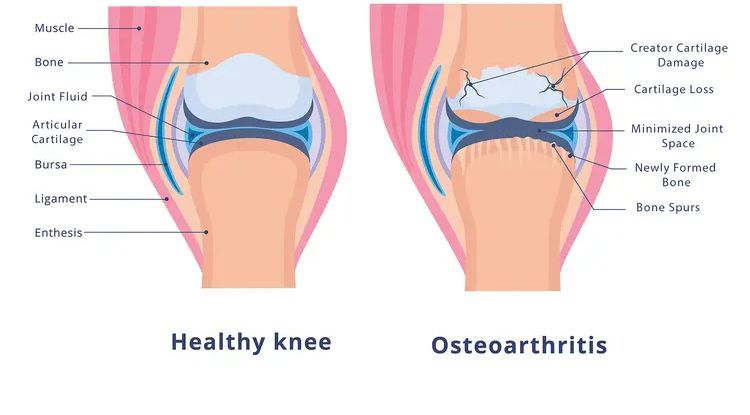
Knee OA often develops gradually, and early symptoms can be easy to brush off. Watch for:
- Morning stiffness that improves after a short period of movement (typically under 30 minutes)
- Pain with activity — particularly with walking, climbing stairs, or standing up from a seated position
- A grinding, clicking, or popping sensation (known as crepitus) when bending or straightening the knee
- Mild swelling around the joint, especially after a more active day
- A feeling of stiffness after sitting for extended periods, such as during a long drive or movie
- Reduced range of motion, such as difficulty fully bending or straightening the knee
- A sense of instability or the knee occasionally "giving way"
Early Signs of Hip Osteoarthritis
Hip OA can be a little trickier to identify because the pain doesn't always show up directly at the hip. Early signs include:
- Groin pain that may radiate to the front of the thigh, buttock, or even down toward the knee
- Stiffness after rest, particularly first thing in the morning or after sitting for a while
- Difficulty with certain movements, such as putting on socks and shoes, getting in and out of a car, or tying shoelaces
- A noticeable limp or change in walking pattern, especially after activity
- Pain that worsens with weight-bearing activities like walking, standing, or climbing stairs
- A "catching" or locking sensation in the hip during certain movements
Why Early Action Matters
Many people wait until pain becomes significant before seeking help — but addressing osteoarthritis early offers several advantages:
- It allows you to build strength and mobility around the joint before symptoms progress
- It can help you identify and modify movement patterns or activities that may be contributing to joint stress
- It gives you tools to manage symptoms proactively, rather than reactively
- It can support long-term joint health and help you stay active in the activities that matter to you
How Physiotherapy Can Help
Physiotherapy plays a central role in managing osteoarthritis at every stage. A physiotherapist can help by:
- Building a personalized exercise program that strengthens the muscles supporting the affected joint, improves mobility, and reduces pain
- Improving movement patterns to reduce unnecessary stress on the joint during daily activities
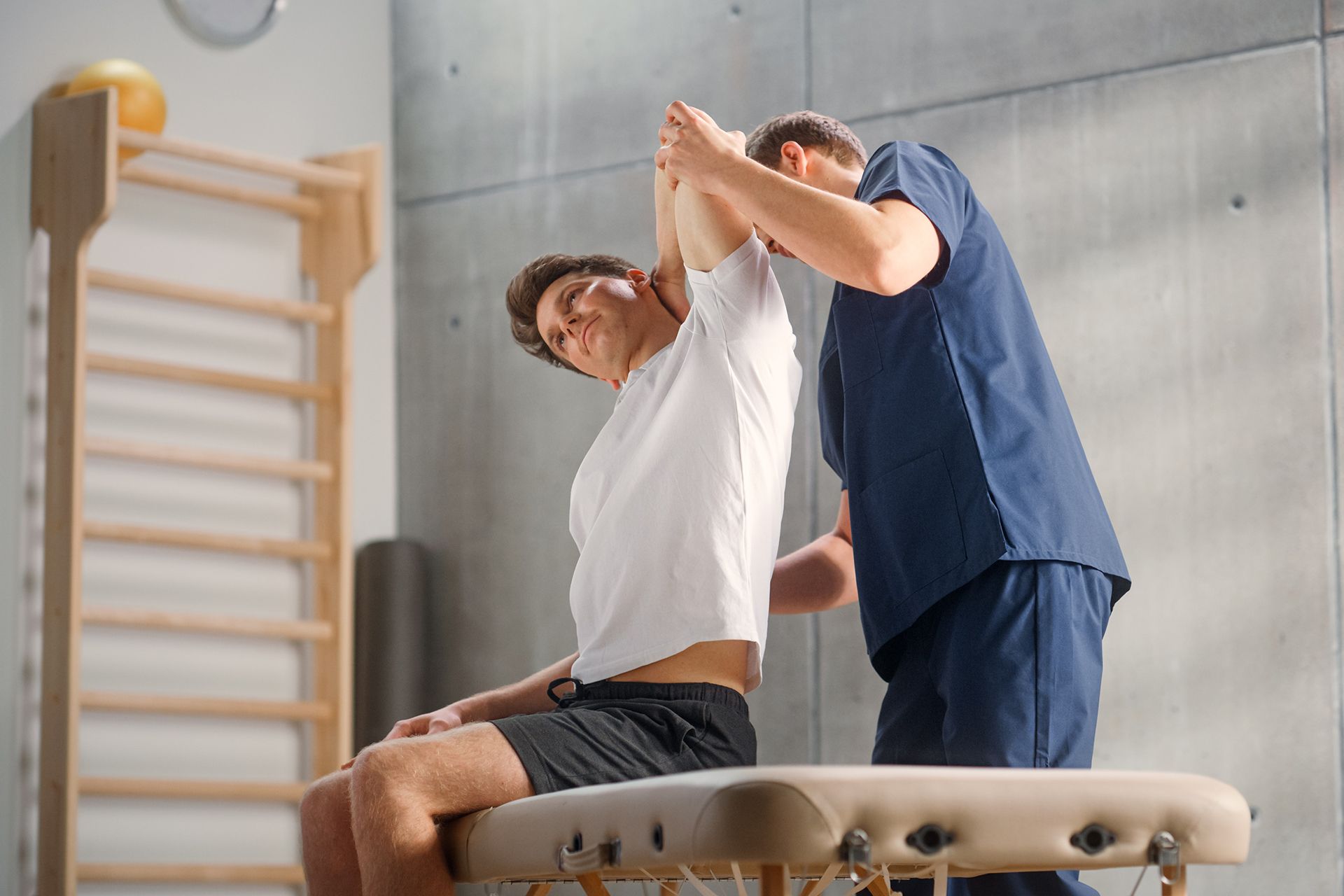
- Providing hands-on (manual) therapy to help with stiffness and discomfort
- Educating you on pacing strategies, activity modification, and self-management techniques
- Guiding the use of supportive tools such as braces, orthotics, or walking aids, when appropriate
- Monitoring progress over time and adjusting your plan as your needs change
Research consistently shows that exercise and movement-based approaches are among the most effective tools for managing osteoarthritis often more effective than rest, which can actually contribute to further stiffness and muscle weakness.
When Should You See a Physiotherapist?
If you're noticing any of the early signs mentioned above particularly stiffness that lingers in the morning, pain with stairs or prolonged sitting, or a change in how your knee or hip feels during everyday activities. it's worth having it assessed. Early intervention can help you stay ahead of the condition and maintain the activities and lifestyle you enjoy.
Ready to take the next step? Book an assessment with our team to get a personalized plan tailored to your joints, your goals, and your daily life.
Learn More: https://youtube.com/shorts/n7izGWGfykY?si=T-YkU4DuXsl4PVhd
Frequently Asked Questions
Is osteoarthritis the same thing as arthritis? Not exactly. "Arthritis" is a general term for joint inflammation and covers more than 100 different conditions. Osteoarthritis is the most common type and is driven mainly by cartilage breakdown and joint wear, whereas conditions like rheumatoid arthritis are autoimmune and involve the immune system attacking the joints.
Can osteoarthritis be reversed or cured? There's currently no treatment that fully restores worn cartilage. However, OA can be effectively managed — many people significantly reduce their pain, improve their function, and slow progression through exercise, strength training, weight management, and other lifestyle strategies.
Is it safe to exercise if I have osteoarthritis? For most people, yes — and it's often recommended. The key is choosing the right type, intensity, and progression for your joint and current symptoms, which is exactly what a physiotherapist can help with. Some discomfort during new exercise is normal, but sharp or worsening pain should be discussed with your physiotherapist.
At what age does osteoarthritis usually start? OA becomes more common after age 45, but it isn't exclusive to older adults. People who have had a significant joint injury — such as an ACL tear — can develop OA in that joint at a much younger age.
Do I need an X-ray to confirm osteoarthritis? Not always. OA is often diagnosed based on your symptoms, history, and a physical assessment. Imaging can help confirm a diagnosis or rule out other causes, but it's worth knowing that X-ray findings don't always line up with how much pain or stiffness someone experiences.
Will I eventually need surgery? Most people with osteoarthritis manage their symptoms well with conservative approaches like physiotherapy, exercise, and activity modification. Surgery (such as joint replacement) is generally considered only when these options haven't provided enough relief and symptoms are significantly affecting quality of life.
References
- Epidemiology of osteoarthritis: state of the evidence. Osteoarthritis and Cartilage. https://www.oarsijournal.com/article/S1063-4584(21)00886-4/fulltext
- Obesity & osteoarthritis. PMC, National Library of Medicine. https://pmc.ncbi.nlm.nih.gov/articles/PMC3788203/