What Our Physiotherapists Recommend for TMJ Dysfunction
The temporomandibular joint (TMJ) connects your jawbone to your skull. It acts as a sliding hinge, assisting with speaking, chewing, and other movements.
When the ligaments and muscles around the joints become irritated or inflamed, you can experience pain, swelling, headaches, difficulty moving your jaw, and other issues.
The good news is that physiotherapists can provide TMJ disorder treatment options that can help you feel better, improve mobility and range of motion, reduce muscle spasms, and much more.
Here are some exercises that our physiotherapists recommend for TMJ:
Goldfish Exercise
Start by pressing your tongue into the roof of your mouth. Place your index finger on the TMJ on the left side of your face and the other finger on your chin. While applying slight pressure with each finger, drop your chin. Be sure to keep your tongue on the roof of your mouth. Repeat the exercise with your right index finger on the right side of the TMJ.
This exercise can be done two ways. The first is partially opening your mouth while the other involves fully opening it.
You may feel mild resistance, but you shouldn’t feel pain while doing it. This exercise can help align your jawbone while you chew.
Relaxed Jaw Exercise
TMJ disorder can cause your jaw to feel tight or have difficulty moving. A relaxed jaw exercise can help improve movement. Place your tongue at the top of your mouth, behind your teeth. Then relax your jaw muscles and allow your teeth to come apart.
Chin Tucks
Pull your shoulders back and push your chest up. Then pull your chin straight back. Hold this position for three seconds. Repeat the process several times.
Tongue Up
Open and close your mouth while keeping your tongue on the roof. Do this slowly to stretch the area and improve your range of motion.
Jaw Movements
Power Forward
- Place a small item, such as a tongue depressor, between your front teeth. Then move your bottom jaw forward. Do this until your lower teeth are moved in front of your top teeth.
- If this exercise is easy, gradually increase the thickness of the item (such as stacking two or more tongue depressors on top of one another)
Side-to-Side
- Use the same small object mentioned above (such as a tongue depressor). Place it between your front teeth, then slowly move your jaw from side to side. As this becomes easier, increase the item’s thickness (by stacking additional tongue depressors, for example)
How a Physiotherapist Can Help with TMJ Dysfunction
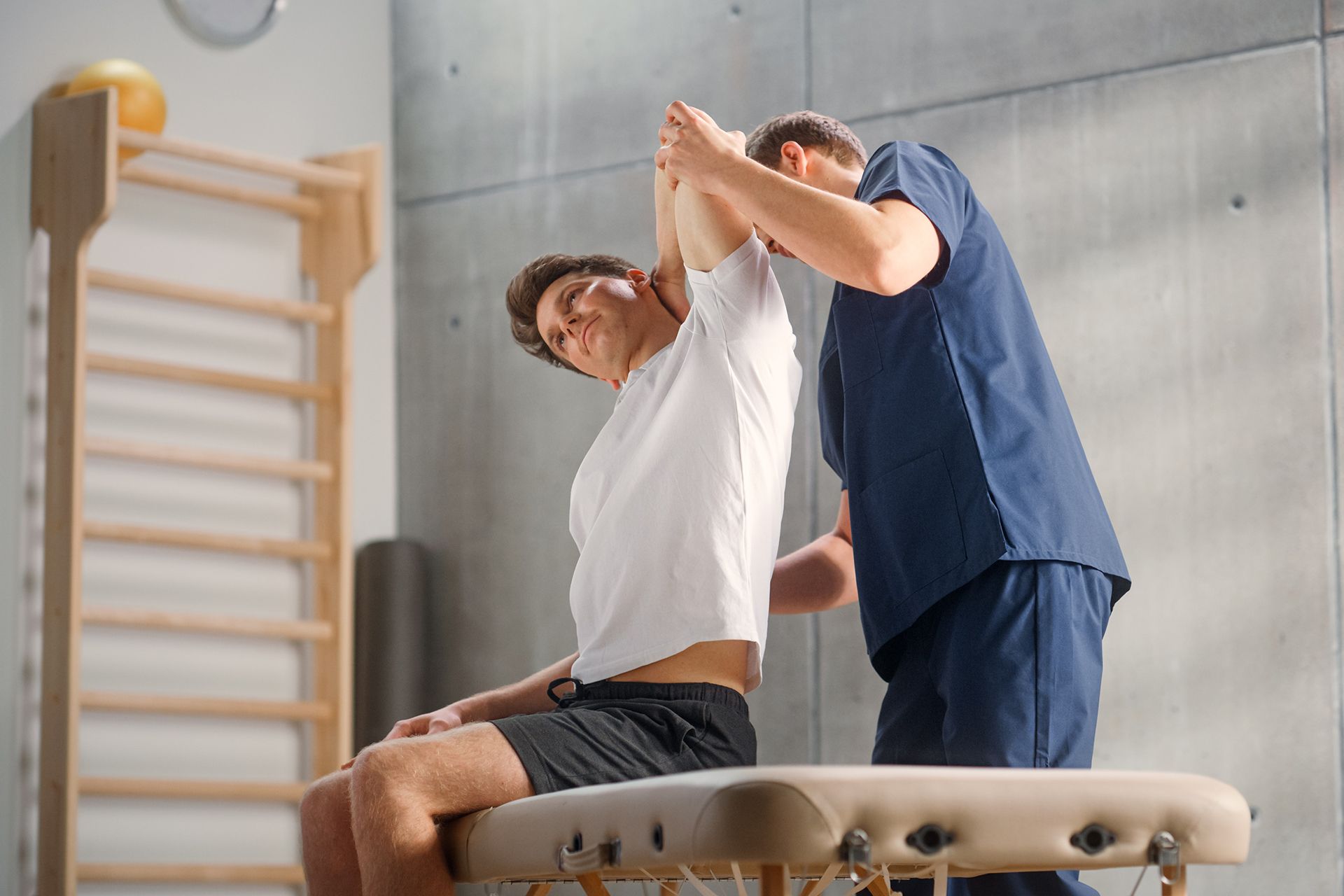
A physiotherapist can lead you in these exercises, help you know how often to do them, how many repetitions are required, and much more. Our team at Delta Physiotherapy & Rehab is here for you.
TMJ disorder symptoms vary depending on the person. Some people may feel pain in the jaw, neck, or shoulders while others will experience headaches, earaches, or other pains. In some cases, a person may find it difficult to open their mouth widely, or they may have trouble chewing. You may hear popping or clicking sounds when you chew. Depending on what you are experiencing, our team will recommend different strategies to help you feel better.
At Delta Physiotherapy & Rehab, we can help you alleviate TMJ dysfunction symptoms, allowing you to live a pain-free life. To schedule an appointment with our team, call 905-270-3086 or book an appointment online. We will work with you to understand your symptoms, learn how your TMJ issue is affecting your day-to-day life, and come up with a customized treatment plan.
With years of experience, knowledge, and skill, we’re the right choice for
physiotherapy.