Back Pain Demystified: Understanding Spondylolysis and Spondylolisthesis
Causes, Symptoms, and Treatment
Back pain can affect anyone, but when the source is a structural issue like spondylolysis or spondylolisthesis, understanding the root cause is key to recovery. These conditions may sound similar, but they involve distinct changes to the spine’s anatomy and function.
Anatomy of the Spine
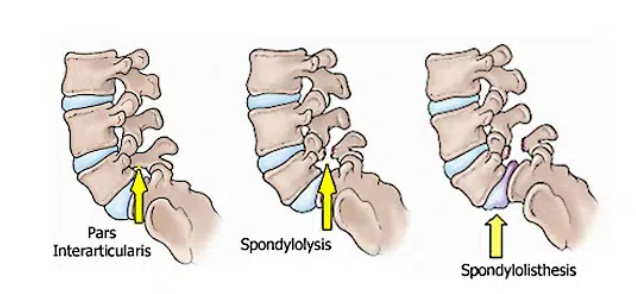
The spine is composed of vertebrae, intervertebral discs, and supporting ligaments that work together to provide stability, flexibility, and protection for the spinal cord. Each vertebra has a bony structure called the pars interarticularis, a small segment critical for spinal stability. In both spondylolysis and spondylolisthesis, the integrity of this region is compromised, leading to pain and mobility issues.
Spondylolysis vs. Spondylolisthesis
Spondylolysis is a stress fracture or defect in the pars interarticularis, most commonly seen in the lower back (lumbar spine). It often develops due to repetitive stress or overuse, especially in athletes.
Spondylolisthesis occurs when a vertebra slips forward relative to the one below it. This condition can develop as a progression of spondylolysis if the fracture weakens the bone structure.
The key difference lies in the displacement: spondylolysis involves a fracture without vertebral movement, while spondylolisthesis involves actual vertebral slippage.
Symptoms and Risk Factors
Both conditions often present with similar symptoms:
- Lower back pain that worsens with activity.
- Stiffness or difficulty bending backward.
- Radiating pain, numbness, or tingling into the legs if nerve compression occurs.
Risk factors include:
- Participation in sports requiring repetitive extension (e.g., gymnastics, football).
- Genetic predisposition to weaker spinal structures.
- Age-related wear and tear, especially in degenerative cases of spondylolisthesis.
How Physiotherapy Can Help
Physiotherapy is a cornerstone of treatment for spondylolysis and spondylolisthesis, focusing on symptom relief, functional improvement, and preventing further progression. A tailored program typically includes:
Strengthening exercises: Targeting the core and lower back muscles to enhance spinal stability.
Stretching: To improve flexibility and reduce strain on the lumbar spine.
Postural education: Teaching proper alignment during daily activities and sports.
Manual therapy: To alleviate stiffness and improve mobility.
Activity modification: Advising on safe ways to move and exercise to avoid aggravation.
In severe cases, when conservative treatments are insufficient, surgical options may be considered. However, most individuals experience significant improvement with physiotherapy.
Take Charge of Your Spine Health
Don’t let back pain hold you back! If you suspect spondylolysis or spondylolisthesis, a thorough physiotherapy assessment can pinpoint the issue and guide you toward recovery. At Delta Physiotherapy and Rehab, we’re here to help you regain strength, mobility, and confidence.
Book a free 15 minute consultation with us today at Delta Physiotherapy & Rehab at either of our convenient locations in Central Parkway or Dundas, Mississauga, and we will get you started on your healing journey!